
If you ask most people what an accountant does, they’ll say something about balancing books. That picture is years out of date. A BSc (Hons) Accounting and Finance now has to teach you to read a financial statement, work out what the numbers are actually telling you, and hand someone a decision they can act on. Balancing anything barely comes into it.
At University of Southampton Delhi, the BSc (Hons) Accounting and Finance programme is built for that version of the job, not the old one.
You can pass every exam on a programme, and still struggle when you get into a placement. What gets you hired isn’t necessarily what you need later on. So this programme puts real tools in front of you right from the start.
You work with LSEG and Bloomberg databases, which means you’re looking at live markets and the decisions people make on them, not a textbook version from five years ago. There are also student innovation projects, where you sit with actual companies and work on problems they haven’t solved yet. That’s the part that travels with you when you go looking for a placement.
The programme lines up with the professional bodies that matter here: ACCA, AIA and CIMA. Two things come out of that. You can study for their exams in a focused way instead of having to do that later, and you can pick up exemptions that cut down how long qualifying takes.
Then there’s Bloomberg. You learn to actually drive the Bloomberg Terminal, which is one of those skills that gets you through the door in finance, and you come away understanding how financial markets work and how investment strategies play out when real money is involved.

The skills carry across banking, auditing, consulting and financial services. Graduates go into roles like:
None of these are places you get stuck. They’re where careers start.
The structure isn’t accidental. Year 1 goes covers the fundamentals of finance and accounting, so nothing you build later is sitting on shaky ground. Years 2 and 3 push harder, with advanced and optional modules in Corporate Finance, Portfolio Management, CSR, Corporate Governance and Tax.
There’s a bigger point running underneath all of it, which is learning to think for yourself and back your own judgement. In Year 3 you take on an independent dissertation, digging into a contemporary accounting and finance problem you choose. By the time you finish, you can pick up a set of financial statements, read them properly, and make a real decision off the back of them.
So you don’t just walk away with a UK degree. You walk away with what the market is actually hiring for, able to take theory and put it to work on messy, real situations. In a world that keeps getting more complicated, that’s the part that counts.
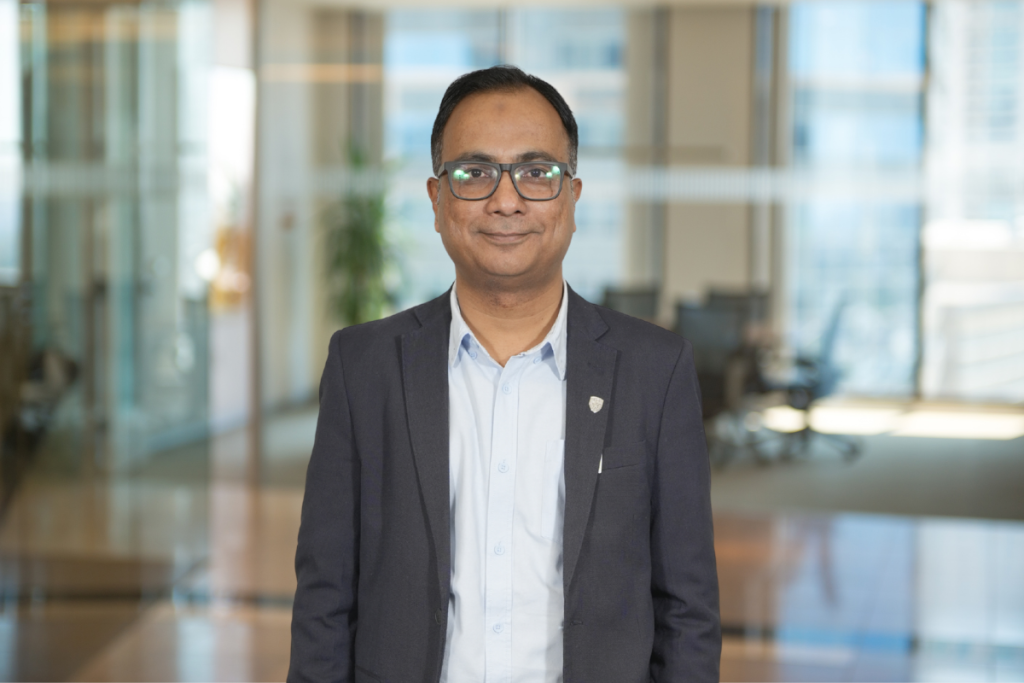
Author: Dr. Mohammed Anam Akhtar, Head of Business Education, University of Southampton Delhi
Date: Monday 10 August 2026
This article is adapted from a recording. Generative AI tools were used to assist with summarising and structuring the transcript into a blog format. The final content has been reviewed and edited by the author to ensure accuracy and alignment with institutional guidelines.